
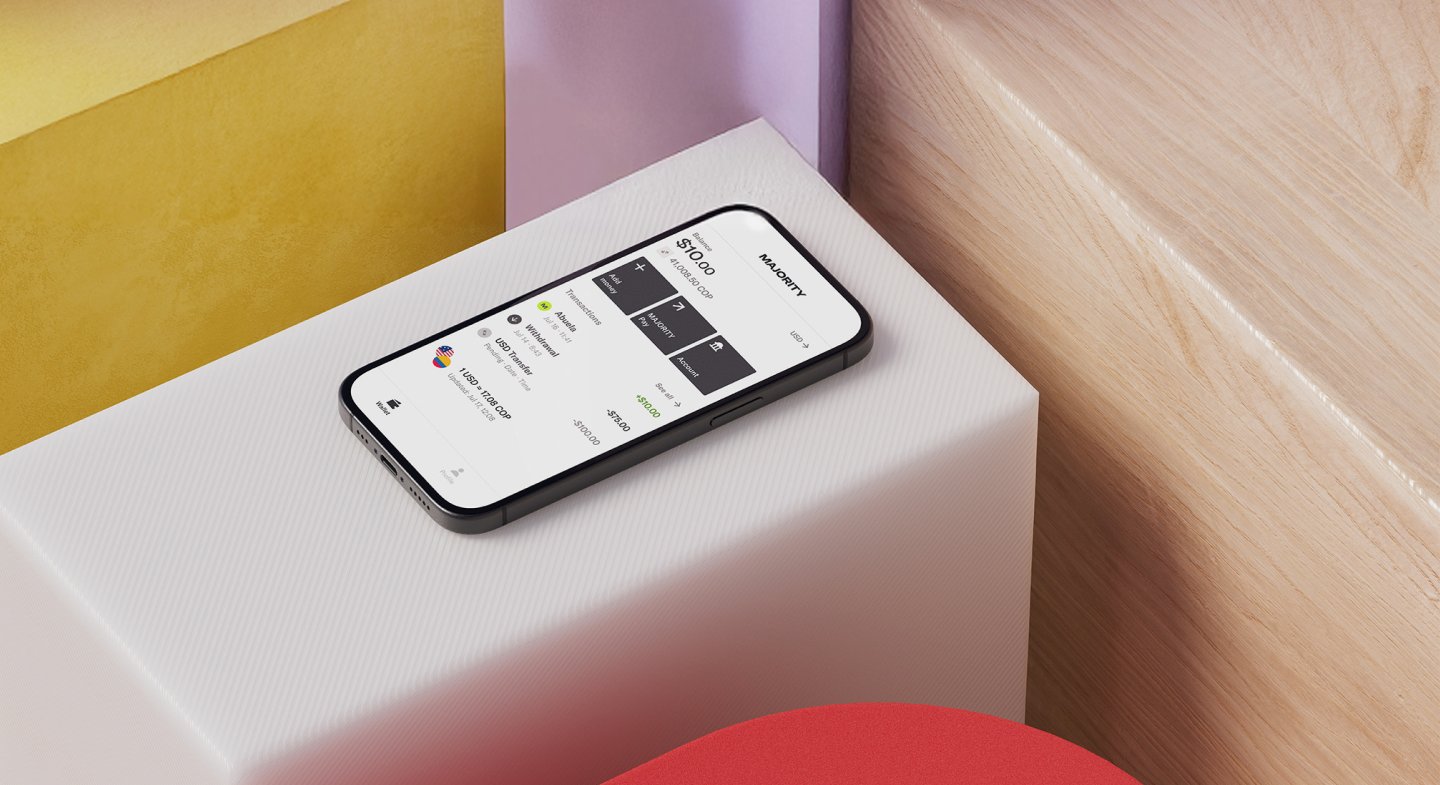
Global Wallet: building a stablecoin wallet
2025
MAJORITY works borderless. Family members can open their own free account in another country, and money moves between them in seconds, fee-free. Because balances stay in digital dollars, users get real protection against local inflation, not just a faster way to send money, but a more stable place to hold it.
Making digital dollars feel safe
Most people we designed for had never held crypto. The wallet had to feel like money they already understood.
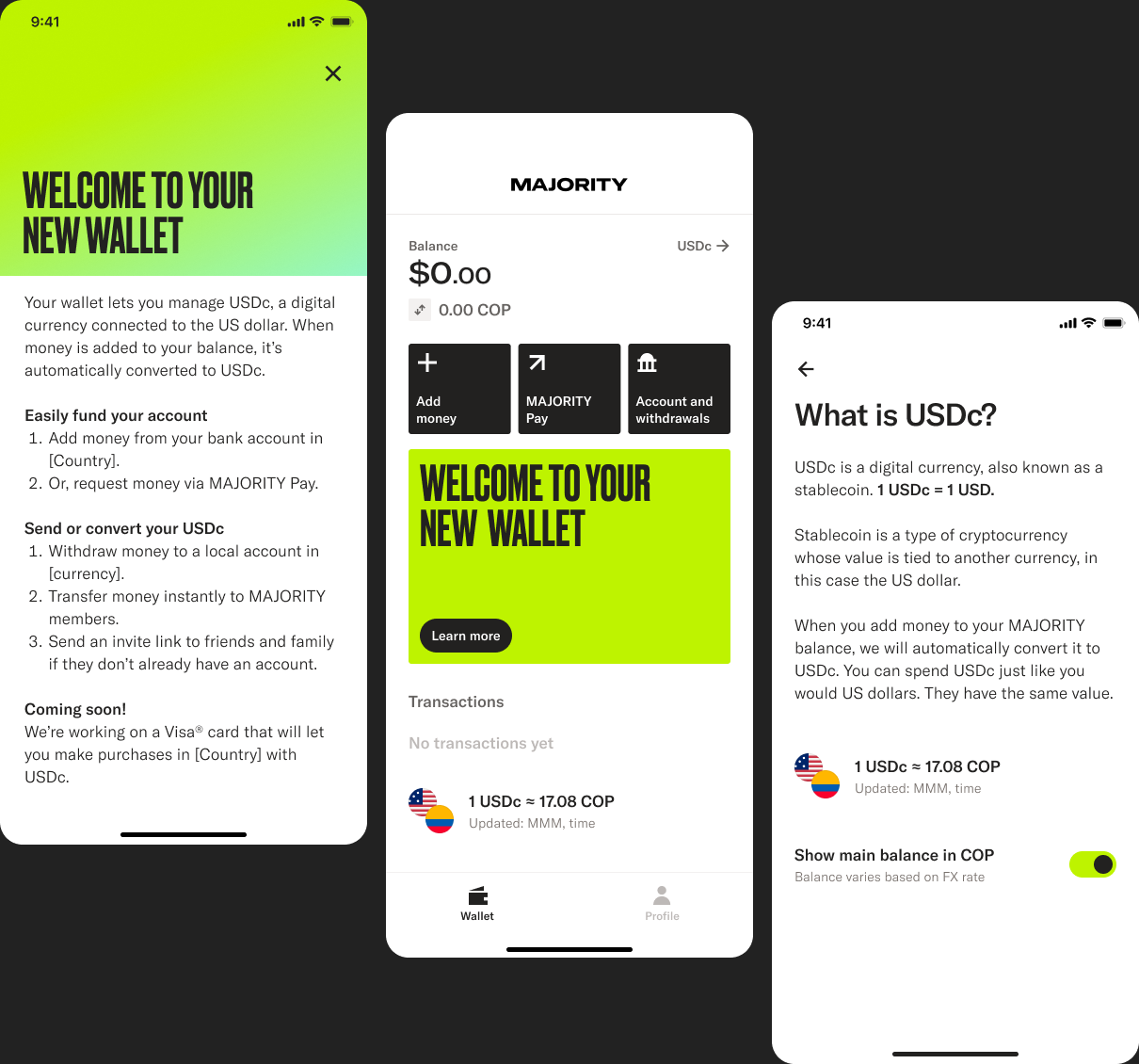
Speak in dollars, not tokens. Balances are always held in digital dollars (USDc), but the value in local currency sits right under it. A switcher lets people make their local currency the big number, so the balance matches how they think about money day to day.
Explain once, where it matters. A content card greets people in the wallet right after KYC, and tapping the USDc icon opens a short “What is USDc?” screen, so the explanation is there for anyone who wants it without getting in the way of anyone who doesn’t.
Be honest about rates. When adding money from a local bank in Colombia or Mexico, people see an indicative exchange rate, with a clear note that funds convert at the rate in effect when they arrive.
Learning after launch. The biggest hurdle turned out to be activation: many people passed KYC but never started using the wallet. Later releases put Add money and Send money straight on the wallet screen, gave MAJORITY Pay its own tab, added content cards for global members, and replaced the local-currency balance with a live FX widget showing rate trends over 1, 3 and 6 months.
From US App to Global Wallet
I designed the foundation for Global Wallet, built on the existing US app but reworked into a different app experience entirely. The result lets users in select Latin American countries, five at launch, hold their balance in USDC instead of local currency. Users can send money between the US and supported countries via crypto, making transfers instant, faster than a traditional remittance.
Challenge
Building on the US app was a strategic choice: it got the product to new markets faster. But it wasn't just about moving fast. I wanted to reuse patterns from the US app so it stayed consistent, but also make holding a USDC balance feel safe to users who'd never touched crypto. Engineering needed something to build against before requirements were fully locked. And it all had to hold together with a new KYC flow and a different user base, without breaking the core app experience people already trusted.
Cross-team, one outcome
Working across teams was key too, staying in sync with KYC and remittance rules being figured out in parallel, so everyone was building toward the same final result.
The final MVP was a scaled-back version of the existing app, built to feel distinct from the core experience. It included a currency converter so users could toggle their balance between local currency and digital dollars, plus a new live FX rate component.
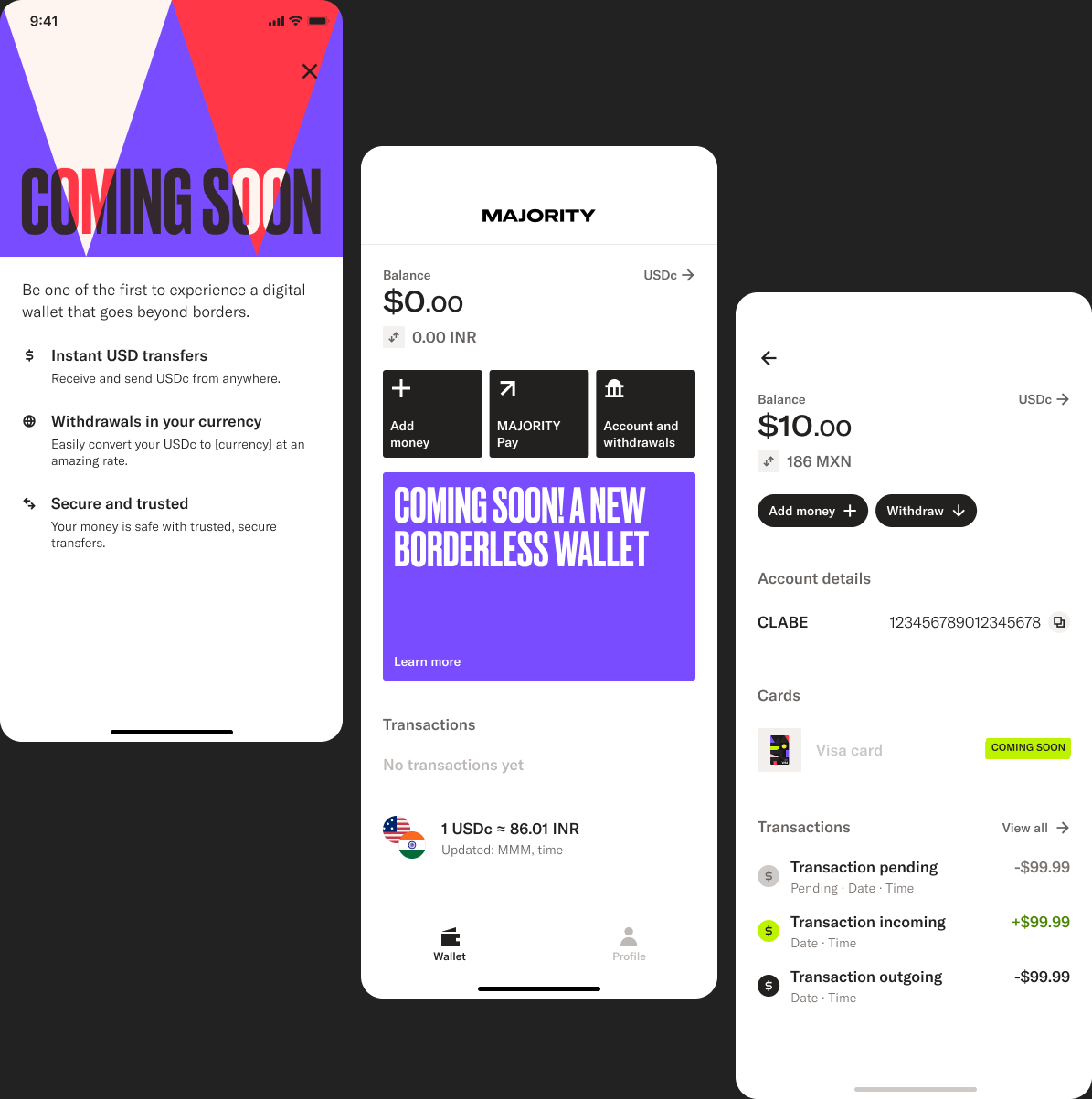
We also built a version for countries launching next, letting users complete KYC into a "coming soon" experience ahead of full launch, so each new market could open with members already waiting.
Continued work
- I also designed new start screens as part of the launch.
- After launch, I worked with the growth team to unify the KYC onboarding across both experiences, making sure users were guided into the right KYC flow and the right app experience.
- I'm currently working on the account-switching experience for US users who also want to hold a local stablecoin wallet.